

How to Find Warehousing Near the U.S.–Mexico Border: A Logistics Guide
For businesses moving goods across the U.S.–Mexico border, proximity to the crossing isn't just a convenience — it's a strategic advantage. Whether you're consolidating inbound freight from multiple Mexican suppliers, staging outbound shipments, or managing inventory that moves frequently between the two countries, having warehouse space near the border can reduce costs, cut transit times, and give your supply chain a buffer against the inevitable delays that come with cross-border operations.
But finding the right warehousing solution near the border takes more than a quick Google search. This guide covers what to look for, where to look, and how to evaluate whether a facility is truly built for cross-border logistics.
Why Location Relative to the Border Matters
Not all "near the border" warehouses are equally useful. A facility that's 45 minutes from the nearest crossing adds transit time, fuel costs, and exposure to traffic and delays on every single move. A facility that's minutes from the crossing — ideally within the same city as a major port of entry — changes the math entirely.
For U.S.-side warehousing, the key border cities to consider are:
San Diego / Otay Mesa, CA — serves the busiest commercial crossing in the western U.S., with strong air and ocean connections through the Port of San Diego and proximity to San Diego International Airport
El Paso, TX — major rail and trucking hub serving the central corridor
Laredo, TX — the highest-volume commercial land port of entry in the United States
McAllen / Pharr, TX — growing hub for produce and manufacturing freight from northeastern Mexico
Each corridor has different strengths depending on where your suppliers or customers are located in Mexico. A facility in the right city for your trade lane is worth far more than a larger or cheaper facility in the wrong one.
What to Look for in a Border Warehouse
1. Dock Capacity and Layout
Cross-border logistics involves frequent, high-volume inbound and outbound movements — sometimes on the same day. A warehouse with limited dock doors creates bottlenecks that slow your operation and create scheduling conflicts with carriers.
Look for a facility with sufficient dock doors relative to your volume, a layout that allows simultaneous inbound and outbound operations, and staging areas that can handle surge periods without backing up the yard.
2. Dry and Temperature-Controlled Storage
Not all freight is the same. If your supply chain includes perishables, pharmaceuticals, electronics, or other temperature-sensitive goods, you need a facility with climate-controlled storage — not just ambient dry space. Many border warehouses offer only dry storage, which limits your options if your product mix changes or expands.
A facility with both dry and temperature-controlled capacity gives you flexibility as your business evolves.
3. Consolidation Services
One of the most valuable functions of a border warehouse is consolidation — combining smaller shipments from multiple origins into full truckloads for more efficient cross-border movement. This is particularly valuable for companies sourcing from multiple Mexican suppliers who want to reduce the number of border crossings and the associated customs filings.
Ask whether the facility actively offers consolidation services and what their process looks like for managing multi-origin inbound freight.
4. Pallet Positions and Storage Capacity
Understand your storage requirements in terms of pallet positions — not just square footage. A warehouse that advertises 50,000 square feet but has low ceilings and poor racking infrastructure may offer fewer usable pallet positions than a well-configured 30,000 square foot facility.
Ask for the number of pallet positions available, the racking configuration, and the maximum stack height. If you're planning to grow, ask about their ability to scale your dedicated storage allocation as volumes increase.
5. Security and Access Controls
Cargo theft is a real risk in border regions, and a warehouse with weak security is a liability. Look for facilities with perimeter fencing, controlled access points, security cameras, and documented access control procedures. If you're C-TPAT certified — or working toward certification — your warehousing partner's security practices need to meet C-TPAT standards as well, since the supply chain security assessment covers all facilities in your logistics network.
6. Customs Expertise On-Site or Closely Integrated
A warehouse located near the border but disconnected from customs operations adds little value over a generic domestic facility. The real advantage of border warehousing comes when the storage and the customs process are tightly coordinated.
Look for a warehousing provider that either has in-house customs expertise or works closely with a customs broker or freight forwarder. The ability to coordinate warehouse releases with customs clearance in real time — rather than treating them as separate processes — is what separates a true cross-border logistics facility from a storage unit near a border city.
7. Real-Time Inventory Visibility
Managing inventory that flows frequently across the border requires real-time visibility into what's in the warehouse, what's in transit, and what's been released. A facility running on manual systems or outdated warehouse management software creates blind spots that lead to errors, missed shipments, and reconciliation headaches.
Ask what warehouse management system the facility uses and whether you'll have direct access to inventory reports and shipment status in real time.
Questions to Ask When Evaluating a Border Warehouse
Before signing any agreement, get clear answers to these questions:
How many dock doors does the facility have, and what are the hours of operation?
What is the total pallet capacity, and how much is currently available?
Do you offer temperature-controlled storage, and at what specifications?
What security measures are in place, and are you C-TPAT compliant?
Do you offer consolidation services for multi-origin inbound freight?
How is customs clearance coordinated with warehouse releases?
What warehouse management system do you use, and will I have direct visibility into my inventory?
What is your track record for on-time outbound releases?
A provider that can answer these questions clearly and specifically — with references to back them up — is in a different category from one that offers vague assurances about service quality.
The Value of an Integrated Logistics Partner
The most efficient cross-border supply chains don't treat warehousing, transportation, and customs as three separate functions managed by three separate vendors. They use an integrated logistics partner — one that coordinates all three under a single roof, with a single point of contact and a unified view of the shipment from origin to final destination.
When your warehousing provider is also your freight forwarder and your customs advisor, information flows freely between functions. A customs hold gets communicated to the warehouse team immediately. A carrier delay triggers a warehouse scheduling adjustment in real time. Problems get solved before they cascade into larger disruptions.
Warehousing Near the U.S.–Mexico Border with LOMA Logistics
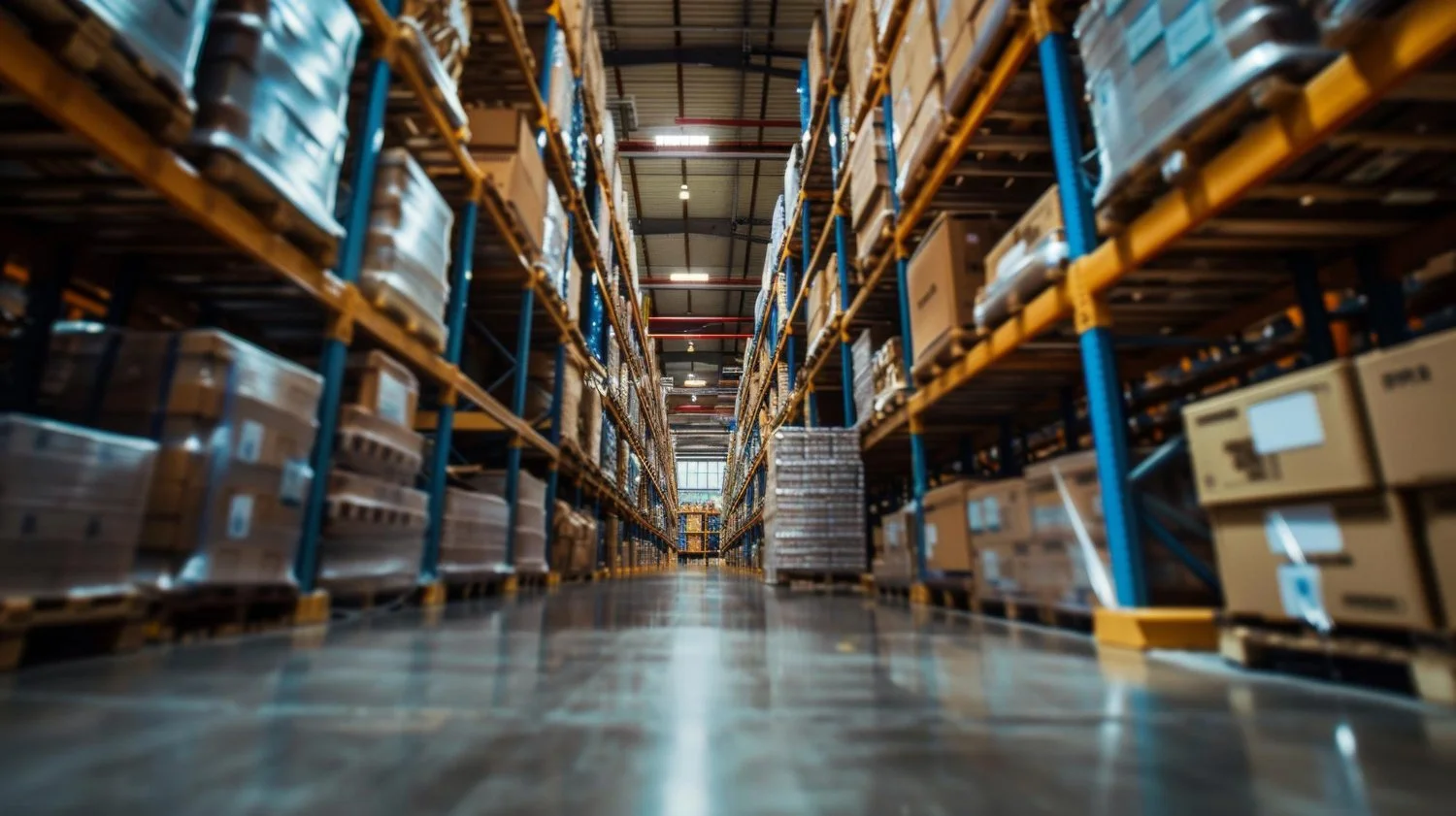
LOMA Logistics operates a 35,000 sq ft distribution center at 7558 Panasonic Way, San Diego, CA 92154 — minutes from the Otay Mesa commercial crossing, one of the busiest U.S.–Mexico border ports of entry. The facility features 11 dock doors, over 1,400 pallet positions, dry and temperature-controlled storage, and a dedicated consolidation area for high-volume cross-border operations.
LOMA's warehousing is fully integrated with our freight forwarding, customs advisory, and C-TPAT compliance services — giving clients a single, coordinated partner for their entire cross-border supply chain.
To learn more about our warehousing and distribution services or to discuss your specific storage requirements, contact our team or request a quote.

What to Look for in a Customs Advisory Firm for Cross-Border Trade
Customs compliance is one of the most consequential — and least forgiving — aspects of international trade. A misclassified product, a missing permit, or a documentation error can result in delayed shipments, fines, or goods being seized at the border. And in U.S.–Mexico trade specifically, where regulatory requirements exist on both sides of the border and change frequently, staying compliant is a full-time job.
That's why many importers and exporters turn to a customs advisory firm — a specialized partner that helps them navigate the rules, avoid costly mistakes, and move goods efficiently across borders. But not all customs advisory firms are equal. Here's what to look for when evaluating one for your business.
1. Deep Knowledge of Both U.S. and Mexican Customs Regulations
U.S.–Mexico trade is governed by two separate customs systems — U.S. Customs and Border Protection (CBP) on one side, and the Servicio de Administración Tributaria (SAT) on the other. Each has its own rules, filing requirements, classification systems, and audit procedures. A customs advisory firm that only knows one side of the equation is only solving half your problem.
Look for a firm with demonstrated expertise in both systems — one that can advise you on CBP requirements for U.S. imports, Mexican customs law for imports into Mexico, and how the two interact under trade agreements like the USMCA. The ability to navigate both regulatory environments is particularly critical if your supply chain involves goods moving in both directions.
2. IMMEX Program Experience
If your business involves manufacturing in Mexico — or if you're a supplier to a company that does — the IMMEX program is central to your trade structure. IMMEX (Industria Manufacturera, Maquiladora y de Servicios de Exportación) allows companies to temporarily import raw materials, components, and machinery into Mexico duty-free for use in manufacturing products destined for export.
Managing an IMMEX program requires rigorous inventory control, regular reporting to the SAT, and strict compliance with Annex 24 and Annex 31 requirements — the inventory control standards that govern IMMEX operations. Non-compliance can result in the loss of the IMMEX certification and significant tax liabilities.
A qualified customs advisory firm should have hands-on experience managing IMMEX programs, including system implementation, SAT reporting, and audit preparation. Ask for specific examples of IMMEX clients they've supported and what their audit track record looks like.
3. VAT Certification Support
Mexico's VAT (IVA) certification program — formally known as the IVA/IEPS certification — allows certified companies to obtain relief from the 16% VAT that would otherwise apply to temporary imports. For high-volume operations, the cash flow impact of this certification is substantial.
Obtaining and maintaining VAT certification requires meeting specific compliance criteria, submitting applications to the SAT, and maintaining ongoing eligibility. A customs advisory firm with experience in this area can help you qualify, structure your operations to maintain eligibility, and manage the renewal process — saving you significant costs over time.
4. A Track Record of Clean Audits
Both CBP and the SAT conduct audits of importers and exporters — and the findings from those audits have real consequences. Critical findings can result in fines, increased examination rates, suspension of trade privileges, or in serious cases, criminal liability.
When evaluating a customs advisory firm, ask directly about their clients' audit outcomes. A firm with strong compliance practices should be able to point to a track record of clean audits — zero or minimal critical findings across their client base. This isn't just a vanity metric; it's evidence that their advisory work translates into actual compliance in practice.
5. Integration with Your Logistics Operation
Customs compliance doesn't happen in a vacuum — it's deeply connected to how your freight moves. Classification decisions affect duty rates. Documentation errors cause border delays. Permit requirements determine which carriers can move which goods. A customs advisory firm that operates in isolation from your logistics provider creates unnecessary friction and risk.
The most effective arrangement is one where your customs advisory and your freight forwarding are coordinated — ideally with the same partner or with firms that work closely together. When your advisor and your carrier are communicating in real time, compliance issues get resolved before they become delays, not after.
6. Tariff Classification Expertise
Tariff classification — assigning the correct Harmonized System (HS) code to your goods — is foundational to customs compliance. The HS code determines the duty rate, any applicable trade remedies (like Section 301 tariffs), import permit requirements, and eligibility for preferential treatment under trade agreements like the USMCA.
Classification errors are one of the most common and costly customs mistakes. A qualified customs advisory firm should have strong classification expertise and a systematic approach to reviewing and validating the codes used for your products. They should also proactively alert you when classification rules change or when your product mix triggers new requirements.
7. USMCA Origin Determination and Documentation
The United States–Mexico–Canada Agreement (USMCA) replaced NAFTA in 2020 and provides preferential duty treatment for qualifying goods traded between the three countries. But claiming USMCA benefits requires proper origin determination — confirming that your goods meet the rules of origin — and maintaining the documentation to support that claim in the event of a CBP or SAT audit.
Many companies are leaving duty savings on the table by not claiming USMCA benefits they're entitled to, while others are claiming benefits incorrectly and creating audit exposure. A good customs advisory firm should actively review your product portfolio for USMCA opportunities and ensure your origin documentation is audit-ready.
8. Proactive Regulatory Monitoring
Trade regulations change. Tariff rates shift. New permit requirements appear. Trade agreements evolve. A customs advisory firm that only reacts to problems — rather than monitoring the regulatory landscape and alerting you to changes before they affect your shipments — is leaving you exposed.
Look for a firm that provides proactive updates on regulatory changes relevant to your trade lanes and product categories. This might come in the form of client advisories, regular check-ins, or direct communication when a change is imminent. The goal is to make sure you're never caught off guard by a rule change that disrupts your supply chain.
9. Training and Internal Capacity Building
The best customs advisory relationships don't create dependency — they build your team's internal knowledge over time. Look for a firm that offers training for your operations, procurement, and logistics staff so that compliance awareness is embedded in your organization, not concentrated in a single external advisor.
This is particularly important for companies with IMMEX programs, where operational staff on the factory floor need to understand inventory control requirements to maintain compliance on a day-to-day basis.
Finding the Right Customs Advisory Partner
The right customs advisory firm is one that combines deep regulatory knowledge with practical operational experience — a partner that understands not just the rules, but how those rules play out in real shipments, real audits, and real supply chains.
LOMA Logistics provides customs advisory services for importers and exporters operating across the U.S.–Mexico border. Our team supports IMMEX program management, Annex 24/31 compliance, VAT certification, USMCA origin determination, and audit preparation — backed by over 20 years of cross-border trade experience and a track record of zero critical findings across SAT and CBP audits.
To discuss your customs advisory needs, contact our team or request a consultation.

The Benefits of Using a Mexico Trading Company for Import & Export Operations
Expanding into the Mexican market — or sourcing from Mexican manufacturers — is a compelling opportunity for many businesses. Mexico is the United States' largest trading partner, with hundreds of billions of dollars in goods crossing the border annually. But doing business in Mexico comes with a layer of regulatory complexity that stops many companies before they get started.
The solution for a growing number of businesses is a Mexico trading company — a legal entity that acts on your behalf as the importer or exporter of record, absorbing the regulatory burden so you can focus on your actual business. Here's what a trading company does, who benefits from it, and why it's become an essential tool for cross-border operations.
What Is a Mexico Trading Company?
A trading company in the Mexican trade context is a business entity that is authorized to import and export goods on behalf of foreign companies that do not have — or do not want to establish — their own legal presence in Mexico.
When you use a trading company, it assumes the role of importer of record (when bringing goods into Mexico) or exporter of record (when sending goods out). This means the trading company:
Holds the import/export registrations required by Mexican law
Handles customs documentation and filings with the SAT (Mexico's tax authority)
Manages tax obligations including VAT (IVA) on imports
Ensures compliance with Mexican customs regulations and trade rules
Takes on legal responsibility for the accuracy of the import/export transaction
In short, the trading company stands in for you in Mexico — giving you access to the market without requiring you to incorporate a subsidiary, hire local staff, or navigate Mexican bureaucracy on your own.
Who Benefits from Using a Trading Company?
Trading company services are particularly valuable for:
Foreign manufacturers and brands that want to sell into Mexico without establishing a local entity
U.S. companies sourcing components or finished goods from Mexican suppliers who need a compliant import structure
Companies testing the Mexican market before committing to a full legal entity
Businesses operating under IMMEX that need to import raw materials or machinery temporarily into Mexico for manufacturing purposes
Any company that finds Mexican customs compliance too complex or resource-intensive to manage internally
The common thread is that the trading company model removes barriers — legal, regulatory, and operational — that would otherwise prevent or delay market access.
Key Benefits of Using a Mexico Trading Company
1. No Need to Establish a Legal Entity in Mexico
Incorporating a company in Mexico is time-consuming, expensive, and requires ongoing administrative maintenance — accounting, tax filings, legal compliance, local representation. For companies that aren't ready to commit to a full Mexican subsidiary, or that simply don't have enough volume to justify it, establishing a legal entity is a significant obstacle.
A trading company eliminates that barrier entirely. You get immediate access to the Mexican market without incorporating locally, without hiring Mexican employees, and without the overhead of managing a foreign subsidiary.
2. Full Customs and Tax Compliance
Mexican customs law is detailed and strictly enforced. Errors in classification, valuation, or documentation can result in fines, shipment holds, or worse. The SAT conducts regular audits, and non-compliance can have serious consequences for importers.
A trading company handles all of this. It manages tariff classification, customs valuation, permit requirements, and VAT processing — ensuring every transaction is compliant from the moment goods enter or leave the country. You benefit from the trading company's expertise without having to build that knowledge internally.
3. VAT Recovery on Imports
One of the less obvious but highly valuable benefits of using a qualified trading company is VAT management. When goods are imported into Mexico, a 16% VAT (IVA) is typically assessed. A properly structured trading company with VAT certification can recover this tax efficiently — a significant cash flow advantage on high-volume import operations.
Without this structure in place, companies often pay VAT without recovering it, effectively adding a 16% cost to their imports that competitors with proper setups don't incur.
4. Speed to Market
Setting up a Mexican subsidiary can take months. A trading company arrangement can be operational in a fraction of that time — sometimes within weeks. For companies responding to a new contract, a market opportunity, or a supply chain change, that speed is invaluable.
5. Reduced Legal and Financial Risk
As the importer or exporter of record, the trading company absorbs the legal liability associated with the transaction. If a shipment is flagged by customs, if there's a documentation issue, or if a regulatory requirement changes, the trading company is responsible for resolving it — not you.
This risk transfer is particularly valuable for companies that lack in-house Mexican trade compliance expertise or that are moving into the Mexican market for the first time.
6. Scalability Without Overhead
A trading company arrangement scales with your business. Whether you're importing a single container per month or running a high-volume manufacturing operation, you pay for the service you need without building the infrastructure to support it internally. As your volume grows, the trading company grows with you — without requiring you to hire compliance staff, invest in customs software, or expand your legal team.
Trading Company vs. Establishing Your Own Entity: When to Choose Each
A trading company is the right solution when:
Your Mexico import/export volume doesn't justify a full subsidiary
You're entering the market for the first time and want to validate demand before committing
You need to move quickly and can't wait for incorporation to complete
You want to outsource compliance risk rather than manage it internally
Establishing your own Mexican entity makes more sense when:
You have substantial, permanent operations in Mexico
You need to hire local employees directly
Your volume and margins justify the overhead of a local subsidiary
You have specific tax or structural reasons to operate as a Mexican entity
Many companies start with a trading company arrangement and transition to their own entity once operations are established and volumes justify the investment.
Working with the Right Trading Company Partner
Not all trading companies offer the same level of expertise or service. When evaluating a trading company for your Mexico import/export operations, look for:
Deep experience with Mexican customs regulations and SAT compliance
VAT certification and the ability to manage VAT recovery efficiently
Experience with IMMEX and other special trade programs if relevant to your operation
A track record of clean audits and zero compliance findings
Integrated logistics capabilities — ideally a partner that can handle both the compliance and the transportation
LOMA Logistics provides end-to-end trading company services for businesses operating across the U.S.–Mexico border. We act as your importer or exporter of record, managing customs compliance, tax obligations, and trade documentation — so you can move goods in and out of Mexico with confidence, without establishing a local entity.
To learn more about how our trading company services can support your cross-border operations, contact us or request a quote.
What Is C-TPAT Certification and Why Does It Matter for Your Supply Chain?
If your business imports goods into the United States — especially through the U.S.–Mexico border — you've likely come across the term C-TPAT. But what exactly is it, who needs it, and what does it actually do for your supply chain? This guide answers those questions and explains why C-TPAT certification has become a competitive necessity for companies involved in cross-border trade.
What Is C-TPAT?
C-TPAT stands for Customs-Trade Partnership Against Terrorism. It is a voluntary program administered by U.S. Customs and Border Protection (CBP) that was launched in the aftermath of September 11, 2001. The program's core purpose is to strengthen the security of the international supply chain and U.S. border security by establishing a partnership between CBP and the private sector.
Companies that participate in C-TPAT commit to implementing specific security standards across their supply chain — from the factories where goods are produced to the trucks that cross the border. In exchange, CBP grants them a range of benefits that translate directly into faster and more predictable border crossings.
C-TPAT is open to a wide range of businesses including U.S. importers, customs brokers, freight forwarders, carriers (truck, rail, air, and sea), and foreign manufacturers.
What Are the C-TPAT Security Requirements?
To become C-TPAT certified, a company must conduct a thorough security self-assessment and implement minimum security criteria established by CBP. These requirements cover several areas:
Business partner requirements: Vetting suppliers, vendors, and other partners in the supply chain to ensure they also meet security standards
Conveyance and equipment security: Ensuring that containers, trailers, and other conveyances are sealed and inspected before shipment
Physical access controls: Restricting access to shipping and loading areas to authorized personnel only
Personnel security: Background checks, employee training, and procedures for reporting suspicious activity
Procedural security: Written policies and procedures for handling cargo, seals, and manifests
Information technology security: Protecting IT systems used in the management of cargo and shipment data
Agricultural security: Preventing the introduction of pests, diseases, or prohibited agricultural products
Once a company submits its security profile and it is reviewed and approved by CBP, the company becomes a C-TPAT certified partner. CBP then conducts periodic validations — on-site reviews — to confirm that the standards are being maintained.
Why Does C-TPAT Certification Matter?
Faster Border Crossings
The most immediate and tangible benefit of C-TPAT certification is reduced border wait times. CBP gives C-TPAT members access to expedited processing lanes — including FAST (Free and Secure Trade) lanes at land border crossings. For businesses moving goods across the U.S.–Mexico border, where delays can cost thousands of dollars per incident, this is a significant operational advantage.
Fewer Inspections
C-TPAT certified shipments are subject to fewer examinations and inspections by CBP. Because your supply chain has already been vetted and approved as secure, customs officers can focus their attention on higher-risk shipments. This reduces delays, lowers the risk of damaged goods during inspection, and keeps your supply chain moving on schedule.
Reduced Cargo Theft Risk
The security protocols required for C-TPAT certification — physical access controls, conveyance seals, personnel vetting — are the same practices that reduce cargo theft. Companies that implement C-TPAT standards consistently report lower rates of theft and tampering across their supply chains.
Competitive Advantage
Increasingly, large manufacturers and retailers are requiring their suppliers and logistics partners to be C-TPAT certified as a condition of doing business. Certification signals to your customers that your supply chain is secure, vetted, and reliable — a differentiator that can open doors to contracts and partnerships that might otherwise be unavailable.
Better Relationship with CBP
C-TPAT members receive access to CBP's trade compliance resources, advance notice of regulatory changes, and direct communication channels with CBP officers. This relationship gives certified companies a meaningful advantage in navigating customs processes and staying ahead of compliance requirements.
Who Should Pursue C-TPAT Certification?
C-TPAT is particularly valuable for:
U.S. importers who move goods regularly across the U.S.–Mexico or U.S.–Canada border
Manufacturers operating in Mexico under the IMMEX program who ship finished goods into the U.S.
Logistics providers — freight forwarders, carriers, customs brokers — who want to offer their clients expedited border processing
Companies in regulated industries such as electronics, automotive parts, pharmaceuticals, and consumer goods, where supply chain security is a contractual or regulatory requirement
If your business depends on predictable, on-time delivery across the border, C-TPAT certification is worth pursuing.
How Long Does C-TPAT Certification Take?
The timeline varies depending on the size and complexity of your organization, but most companies complete the process in 3 to 6 months. The process involves:
Self-assessment: Reviewing your current security practices against CBP's minimum security criteria
Gap analysis: Identifying areas where your practices fall short and developing a remediation plan
Security profile submission: Submitting your written security profile through CBP's CTPAT Portal
CBP review: CBP reviews your submission and may request additional information or clarification
Approval: Once approved, you receive certified status and access to program benefits
Ongoing validation: CBP conducts periodic on-site validations to confirm compliance
The most time-consuming part is typically the internal assessment and documentation phase — particularly for companies that haven't previously formalized their security procedures.
Maintaining Compliance After Certification
C-TPAT certification is not a one-time achievement. CBP requires ongoing compliance, and companies must update their security profiles when significant changes occur — new facilities, new trade lanes, new business partners. Failure to maintain standards can result in suspension or removal from the program, along with the loss of all associated benefits.
This is why many companies work with an experienced logistics partner to support ongoing C-TPAT compliance — including security training, documentation updates, and preparation for CBP validation visits.
Getting Started with C-TPAT
LOMA Logistics has supported businesses through the C-TPAT certification process and ongoing compliance management for over two decades. From initial security assessments and gap analysis to documentation, employee training, and CBP validation preparation, our team guides clients through every step — ensuring certification is achieved efficiently and maintained without disruption to daily operations.
If you're ready to pursue C-TPAT certification or need support maintaining your existing program, contact the LOMA team or request a consultation today.
How to Choose a Freight Forwarding Company for U.S.–Mexico Trade
If your business moves goods across the U.S.–Mexico border, you already know that finding the right freight forwarding partner is one of the most consequential decisions you'll make. The wrong choice means delays at the border, unexpected costs, compliance headaches, and shipments that arrive late — or not at all. The right choice means your supply chain runs quietly in the background while you focus on growing your business.
This guide walks you through the key factors to evaluate when choosing a freight forwarding company for U.S.–Mexico trade.
1. Deep Experience in Cross-Border Operations
Not all freight forwarders are created equal. A company that excels at domestic U.S. shipping may have very little experience navigating the complexities of the U.S.–Mexico corridor — and that gap will show up quickly when you have a shipment stuck at the border.
Look for a forwarder with a proven track record specifically in cross-border trade between the U.S. and Mexico. This means experience with Mexican customs (SAT), U.S. Customs and Border Protection (CBP), maquiladora operations, and the trade corridors that connect both countries. Ask how long they've been operating in this space and whether they can demonstrate their compliance record.
A company with 20+ years of cross-border experience has seen every scenario — delays, regulatory changes, documentation errors — and knows how to respond without disrupting your operation.
2. Full-Service Capabilities Across All Modes
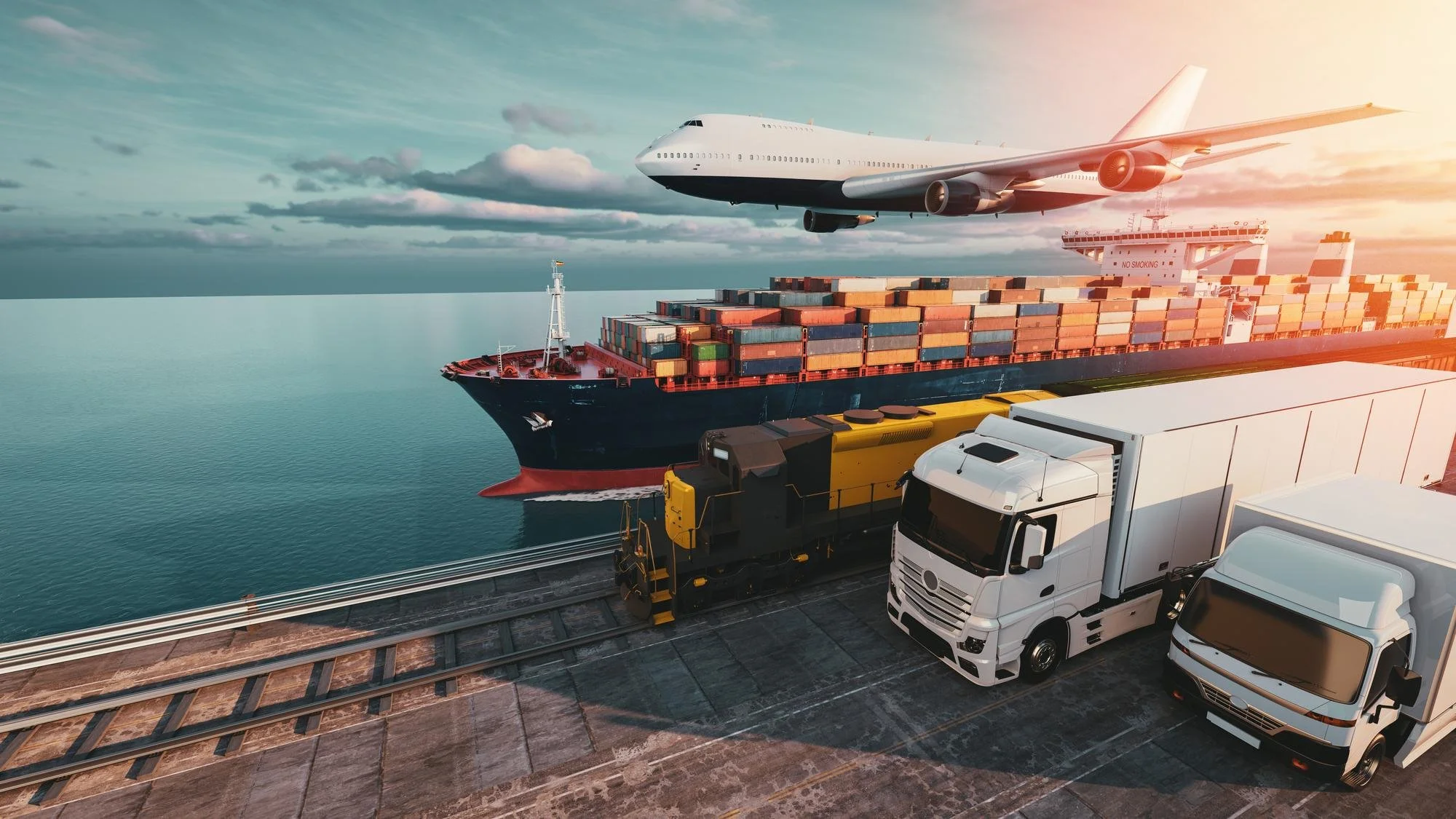
Cross-border trade rarely fits neatly into one transportation mode. Your freight might travel by truck from a factory in Monterrey, transfer to rail at the border, and complete the journey by air to a distribution hub in the U.S. A strong freight forwarder should be able to coordinate all of this under one roof.
When evaluating providers, look for coverage across:
Trucking (FTL and LTL): Essential for most cross-border shipments. Look for a partner with real carrier capacity and knowledge of border crossing procedures.
Rail: Critical for high-volume or heavy freight where cost efficiency matters.
Air freight: Necessary for time-sensitive or high-value cargo.
Ocean freight: Important if your supply chain extends beyond North America.
Working with a single provider across all modes simplifies communication, reduces hand-off errors, and gives you one point of contact when things need to be resolved quickly.
3. Customs and Compliance Expertise
Customs compliance is where most cross-border shipments run into trouble. The U.S.–Mexico trade environment is governed by a complex web of regulations — IMMEX (Mexico's manufacturing export program), C-TPAT certification, Annex 24 and 31 requirements, VAT certification, and regular audits by both SAT and CBP.
Your freight forwarder should not just coordinate transportation — they should actively help you stay compliant. Ask specifically about:
Their experience with IMMEX program management
Whether they can support C-TPAT certification or compliance
Their track record in customs audits (zero critical findings is the benchmark to look for)
Their ability to manage documentation and customs clearance on both sides of the border
A forwarder without strong compliance expertise is a liability. The costs of non-compliance — fines, delays, seized shipments — far outweigh any savings from choosing a cheaper provider.
4. Real-Time Visibility and Proactive Communication
One of the most common complaints about freight forwarders is poor communication. You submit a shipment and then wait, with no updates until something goes wrong. In cross-border trade, that gap is unacceptable — too much can change at the border crossing, in customs, or in transit.
Your forwarder should provide:
Real-time shipment tracking across all modes
Proactive communication when delays or issues arise — not reactive explanations after the fact
A dedicated point of contact who knows your account and responds quickly
Before signing with any provider, ask how they handle exceptions. If their answer involves waiting for you to call them, that's a red flag.
5. Physical Presence Near the Border
A freight forwarder with boots on the ground near the U.S.–Mexico border is worth significantly more than one operating remotely. Border operations require local knowledge — relationships with customs agents, familiarity with specific crossing procedures, and the ability to respond in real time when something needs to be resolved at the crossing.
A forwarder headquartered in a border city like Calexico, El Paso, Laredo, or San Diego has operational advantages that remote providers simply can't replicate. They know the corridors, they know the agents, and they can act without waiting for a chain of approvals.
Similarly, warehousing capacity near the border gives you flexibility — the ability to stage, consolidate, or hold shipments as needed without long-haul repositioning costs.
6. References and a Verifiable Track Record
A reputable freight forwarder should be able to point to specific results: on-time delivery rates, cost savings delivered for clients, compliance outcomes, and client relationships that have lasted years. Ask for references from companies in industries similar to yours and follow up on them.
Also look for third-party recognition — industry awards, directory listings in platforms like Thomasnet or FreightWaves, and any published case studies or client outcomes.
7. Scalability and Custom Solutions
Your freight needs today may look very different in two years. The best forwarder for your business is one that can grow with you — adding capacity when you scale, adjusting services as your trade patterns shift, and offering tailored solutions rather than cookie-cutter packages.
Ask whether the provider can handle both small LTL shipments and large dedicated loads. Ask whether they can support warehousing, compliance consulting, and trading company services if you need to expand your Mexican operations.
Finding the Right Partner
Choosing a freight forwarding company for U.S.–Mexico trade is not a decision to make based on price alone. The variables — compliance risk, shipment reliability, communication quality, border expertise — have a direct impact on your bottom line and your ability to deliver to your customers on time.
LOMA Logistics was built specifically for this corridor. With over 20 years of cross-border experience, headquarters in Calexico, CA, and a 35,000 sq ft distribution center in San Diego minutes from the border, LOMA offers air, ocean, rail, and trucking services alongside C-TPAT consulting, IMMEX program support, and customs advisory — all under one roof.
If you're evaluating freight forwarding partners for U.S.–Mexico trade, request a quote or contact the LOMA team directly to discuss your specific needs.